The Stablecoin Reckoning
Why Walmart, Not JPMorgan, Will Lead the Next Payments Revolution We are entering the era of daily headlines about everyone—and their mother—issuing a stablecoin. Most will be vaporware. Some won’t. A
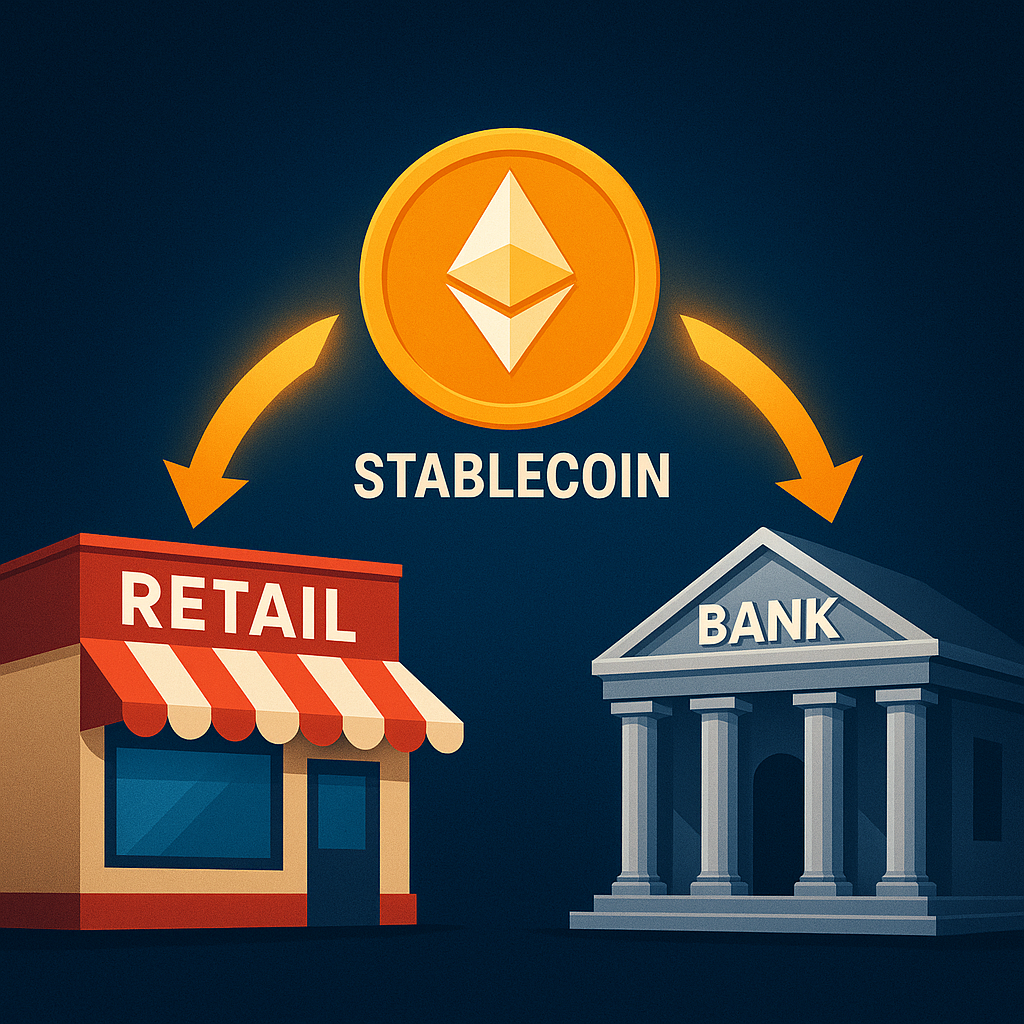
Why Walmart, Not JPMorgan, Will Lead the Next Payments Revolution
We are entering the era of daily headlines about everyone—and their mother—issuing a stablecoin.
Most will be vaporware. Some won’t. Among the credible ones, many will stall out. A few will quietly change everything.
Here’s the tell: look at who’s building it. If it’s being driven by the victims of the traditional payments industry, it’s worth watching. If the beneficiaries are pushing it, it’s likely just noise.
That’s why last week’s Wall Street Journal report on Amazon and Walmart exploring stablecoins is worth paying attention to. Merchants lose billions annually to payment intermediaries. Given their razor-thin margins, that cost is brutal. For decades, they’ve tried to claw it back, through legislation (Durbin, etc.), class-action lawsuits, and even building their own infrastructure.
Now, they may finally have a real alternative.
Meanwhile, reports of banks or bank consortia issuing stablecoins should be met with deep skepticism. Large banks are unlikely to launch open, public-chain stablecoins. Why? Because corporations don’t build products that compete with their profit centers.
The naive take is: “JPMorgan Chase will issue a stablecoin, and Walmart will just use that.”
But JPMorgan profits from charging Walmart for payments. It earns revenue via interchange, FX spreads, and the interest it doesn’t pay on the float Walmart maintains to cover payroll, suppliers, taxes, etc.
Stablecoins eliminate all of that. Walmart would much rather issue its own, or partner with a third-party issuer that passes back most of the interest. Circle already does this with Coinbase on Ethereum. Why not extend the same deal to merchants? Circle’s cost structure allows it to profit while still sharing meaningful yield.
Banks, by contrast, are stuck. Today, they pay virtually nothing on corporate deposits. Not because they can’t, but because they don’t have to. Per the FDIC, the average interest on U.S. deposits is 1%, even as short-term rates hover near 5%. Banks know their customers are trapped.
That’s why JPMorgan Chase and every other large bank are unlikely to offer a stablecoin that effectively competes with deposits. Those deposits are among their cheapest and most reliable sources of funding. A stablecoin that redirects that yield elsewhere would be an act of self-cannibalization.
This disruption goes deeper. Over time, foreign exchange markets will also move on-chain. Multi-currency stablecoin issuers will offer swaps on the backend. Maybe they’ll charge a small fee until DeFi undercuts even that, but it will still be far cheaper than bank FX.
This transition might take years. And banks may still find opportunities to provide services to stablecoin issuers. But most incumbents will be too distracted, too busy defending their moats, in order to capitalize on it.
Eventually, the market will wake up. You’ll know it’s happening when the share prices of large banks and legacy payment networks, Visa, Mastercard, the like, suddenly drop. That will be their Minsky moment.
Why? Because markets will have finally realized what they don’t yet understand.
**The purpose of crypto is not to find new ways to make money from payments.**The purpose of crypto is to ensure nobody does.
Just as the internet made publishing free, blockchains will make money and moving it, effectively free.
(re-purposed from a tweet by Omid Malekan)